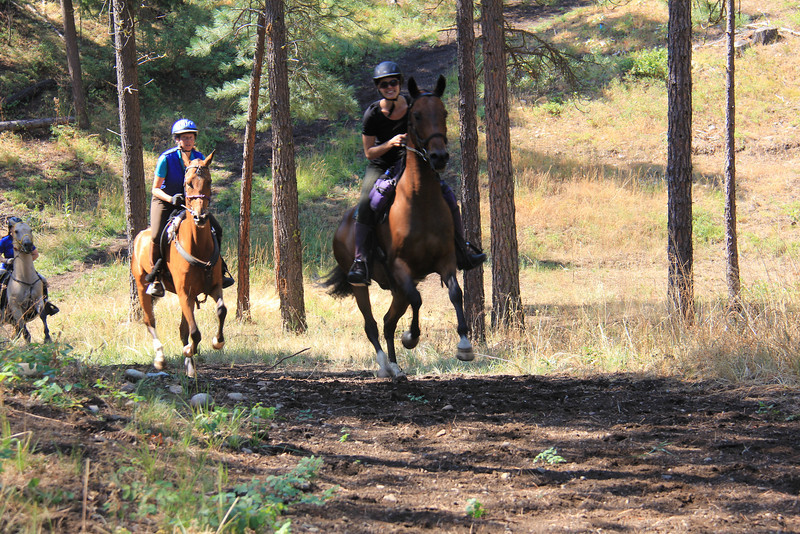
Last Monday, I had a little "procedure" Lest you think this is some horrible thing, it had to do with my (sigh) left ankle. That is the one that I had operated on in August of 2012, where a longitudinal tear was repaired. It's been over a year now and I'm still not back to normal (yes, this is a bit of a whine). I have been able to ride for about 2 hours but by the 2 hour mark I have been ready to saw my leg off. As my preferred type of riding/competition is endurance, 2 hours doesn't get you very far. Now, one person did suggest I just ride faster. Good idea. I did that in 2012, figuring if I could ride faster, my ankle wouldn't hurt so much. It did get me 3 top ten awards, but I was doing those rides in around 3 hours, so faster....might be a stretch. It was also suggested I drop down to trail rides. My competitive spirit just won't go for that. I figure I can do THAT when I'm 90. Anyway, I went back to the doctor and told him what was going on. He suggested we try breaking up the adhesions (most likely one of the big reasons there is still pain, along with age, lack of strength and lack of stretch). So, off to another office where I had dye, anesthetic (that was wonderful) and steroids injected in my tendon sheath. Kind of a neat thing, they showed me the tenogram (I believe that is what it is called) afterwards.
I rode Wednesday for about 30 minutes...very good, no pain.
I rode Thursday on the trail for about 60 minutes...pain at around 40 minutes, but I was able to do ankle rotations and finish the ride with minimal pain. Also, I wasn't dead lame when I got off, which has been the case up to now.
Galen's ears on our Friday Trail Ride at Mann Road, Sultan, WA
Monica and Mahri. Mahri was a star!
I rode Friday on the trail, only for around 30 or 40 minutes (Mahri's first trail ride, so it was short and slow), but had very little pain.
So, am I fixed? Probably not, but at least it's a somewhat more optimistic outlook than I've been having.
Will I be on the endurance trail next year? Stay tuned...
Sunday, September 22, 2013
Thursday, August 29, 2013
Guest Author!
Today I have a lovely story about a mare that I bred and sold. The horse is Kamileshen (Aliger x Anastasia) a 2006 purebred Teke mare. Here is what her proud owner has to say:
The Water. Every rider
has attempted it, most riders have conquered it. The moment of indecision on
your horses part as it decides to skirt the menacing site, or indulge its
riders and get its feet wet. This feat is particularly difficult when your legs
only descend half way down the ribcage and your strength limits your ability to
steer, or stop.
Ears fluctuating back
and forth as she attempts to make out her riders confusing cues, she looks to
me for a clue and then focuses again on her rider. Legs thumping the sides,
hands pulling back and somewhat to the side towards the water. She looks at me
for one final look of approval then delicately sticks her feet into the murky
depths. She is rewarded by hearty pats from her rider.
At the time of this
feat Nola, the rider, was four, Kamileshen (or Shen) the horse was six and we
were at a local cross country course. It was an open day, a day where riders
bring their horses out for practice and exposure. Shen and I had just finished
working over some jumps when Nola stated she wanted to try the water jump. We
were done, and I would often let Nola sit on Shen’s back while I cooled her
down, so I boosted her into the saddle and clipped a lead line onto her bridle
so she could try the water ‘jump.’ The entire feat took about five minutes – I
stood quietly on the end of the lead – letting them decipher one another’s cues
as they would. I was so busy watching them that I did not notice the audience
that had built up. Spectators on foot and on horse were also watching. Many
were probably just awaiting their turn at the water jump, but none wanted to
interfere or disrupt the delicate balance until the ‘jump’ was complete.
Nola and Shen, Pas Pascucci photo
The walk back to the
trailer was an eventful one, with riders and walkers smiling and commenting on
Shen. The questions almost always started with, ‘What a nice horse, how old is
she?’ Followed by ‘Really? What breed is she?’
I could understand
their skepticism. I had a field full of geriatrics – my old eventer, my hunter
jumper, my mom’s endurance horse, my dad’s trail horse. All still perfectly
capable of packing a young child, but instead I chose the youngest horse in the
lot for my four year old daughter. The reason, I strongly believe she cares
about Nola, to her we are her family and I have learned that Tekes do their
best to take care of their family. I have many examples, the time the gate was
not opened all the way and Shen would not let Nola lead her through – rather
she stood firm and whinnied for my attention. The time I was riding in the
mountains and a misstep left me dangling from the end of the reins - she stood
legs spread, head down until I scrambled up the side and back onto the trail.
I purchased Kamileshen
in 2008 with dreams of getting back into eventing, but she has a home for life
because she is family. Breeders place an awful lot of importance on ‘Tekes in
Sport,’ but no one noticed Shen’s clean clear round that day – but they all
noticed the small child, her tongue sticking out in concentration and the quiet
patience of her mount. It is not their athletic ability that makes them
invaluable, it is their spirit.
Today, Shen shares the
field with two other Tekes, and I make it to maybe one event a year. Nola and
Shen are now competing in schooling classes and light horse shows where she
proudly sits upon her golden mount and announces ‘She is an Akhal Teke.’
Darla Dickinson, Hope BC
Monday, August 19, 2013
Another Busy Weekend!
This past weekend, Monica and I took Danny (Magdan) down to the Northwest Equestrian Center in Yelm WA to do some cross country schooling with a few friends. Monica and Danny have been doing quite a bit of show jumping and he definitely has the trail experience, so this was a logical progression.
We headed down around 10ish on Saturday and arrived around 1 (quite a bit of traffic, but that is Seattle) at the Equestrian Center. It's a very large place with huge fields, lots of cross country jumps and rows of temp stalls. It was very low key (sign the waiver and pay your fee), which was pretty nice. Catrina and Jeremy Quantrell were already there with Mazaly, so Catrina schooled while Monica walked Danny around and then tacked up. Amrita wasn't there yet and we later heard her truck had overheated about 5 miles out. I did some film of Catrina and Mazaly making it all look easy. They did some beginner novice jumps and then started moving up. By the time Amrita showed up, Catrina was pretty much done and they headed out.
Amrita, Monica, Stella and Marina (two of Amrita's junior students) were all taking a lesson with Vicki (I didn't catch her last name). Vicki did a lovely job, getting everyone on the same page and warmed up. I trundled along with the video camera and huge tripod, wishing for the pony and cart that had been zipping around earlier. Happily, I had a little pull cart or there would probably be a lot less film of that day.
I didn't take any still shots on Saturday, so these are from Sunday's playing, but they are over basically the same jumps the ladies did on Saturday.
Marina and Kegas
Monica and Danny
Stella and the totally cute pony Puddin
Amrita was schooling over the largest jumps, doing some of the preliminary jumps (I'm pretty sure I got that right) with Paktaly making it look easy. Danny is just starting over cross country jumps, so he did the beginner novice jumps and ended his day doing a drop into the water and out up the bank.
Everyone seemed to be having a lot of fun, horses included and I really, REALLY want to get back into the saddle. Maybe not to go over big jumps, but doing my thing. Soon!
We headed down around 10ish on Saturday and arrived around 1 (quite a bit of traffic, but that is Seattle) at the Equestrian Center. It's a very large place with huge fields, lots of cross country jumps and rows of temp stalls. It was very low key (sign the waiver and pay your fee), which was pretty nice. Catrina and Jeremy Quantrell were already there with Mazaly, so Catrina schooled while Monica walked Danny around and then tacked up. Amrita wasn't there yet and we later heard her truck had overheated about 5 miles out. I did some film of Catrina and Mazaly making it all look easy. They did some beginner novice jumps and then started moving up. By the time Amrita showed up, Catrina was pretty much done and they headed out.
Amrita, Monica, Stella and Marina (two of Amrita's junior students) were all taking a lesson with Vicki (I didn't catch her last name). Vicki did a lovely job, getting everyone on the same page and warmed up. I trundled along with the video camera and huge tripod, wishing for the pony and cart that had been zipping around earlier. Happily, I had a little pull cart or there would probably be a lot less film of that day.
I didn't take any still shots on Saturday, so these are from Sunday's playing, but they are over basically the same jumps the ladies did on Saturday.
Marina and Kegas
Monica and Danny
Amrita and Paktaly
Amrita was schooling over the largest jumps, doing some of the preliminary jumps (I'm pretty sure I got that right) with Paktaly making it look easy. Danny is just starting over cross country jumps, so he did the beginner novice jumps and ended his day doing a drop into the water and out up the bank.
Everyone seemed to be having a lot of fun, horses included and I really, REALLY want to get back into the saddle. Maybe not to go over big jumps, but doing my thing. Soon!
Monday, August 12, 2013
HorseFlicks filming at the Washington State Horse Park, August 10th, 2013
This past weekend was our first HorseFlicks film shoot for our new Akhal-Teke promotional video in the Rare Breeds series "Extinction is Forever". This is the first of 3 film shoots, which we did to be able to include as many horses and people in the US as possible. We've had a very good response and I think the finished product will be fantastic. This is from my perspective - I brought 4 horses to the Washington State Horse Park for the filming. There were 6 other horses that came, although we had invited everyone in the Pacific Northwest. It went very well though, all the horses were great, the people were smiling and Jon Mays (the film maker) said he got some excellent footage.
9 of the 10 horses and riders at the Horse Park, with Jon Mays in the foreground filming. Tom Wohllaib photo
Me and Astrachan (who came out of retirement for this) and Shannon Mayfield and Asil Tumay. My endurance gear really pales next to Shannon's gorgeous bling! Cindy Balogh photo
Catrina and Mazaly galloping through the water. I'm really bummed that I cut off Catrina's head, as otherwise it's a pretty good shot.
We had the bunch trot and canter up and down the road, there was some whooping and hollering going on, along with big grins. Wendy and Alpowa are in front, then Monica and Magdan, then Erin and Kuwwat, then Shannon and Octopelle and I think it's Catrina and Mazaly in back.
Kuwwat, Erin, Kiyallah and Corbin Heatherstone taking a family walk at the WSHP. Monica Bretherton photo
We got there around 4 pm on Friday, as I didn’t plan on riding
that day. We got the horses (4 bay boys, Astrachan, Andymn, Arzuw and Magdan) settled in and walked around
looking at what was what. Gorgeous facility, lovely trails, really nice
arenas and cross country. Jon showed up around 6 (I think) without
Joanne, his assistant, who had food poisoning and was recovering in a hotel in Seattle. We
took him around to the places we’d found to see if he thought they were
ok. He agreed (he is SO nice!). People started coming in, Catrina
and Jeremy first with Mazaly, then Shannon and Craig and Tommy and Octopelle,
then Erin and Kiyallah and Corbin (their 2 year old son) with the lovely stallion Kuwwat. I fed everyone hamburgers
and hot dogs and we planned Saturday. Jon headed back to his hotel around 8 I
think. Then it started raining, really really hard. A guy I met
Sunday said it rained 5 inches in 2 hours. Lightning, thunder! I
was hoping we’d have good weather in the morning and maybe the rain would cool
it down a bit (it was over 90 on Friday)
Several of our riders and horses, from first horse back: Monica Bretherton and Magdan, Angela Kay Davenport and Arzuw behind them, Dani Scott and Andymn, Wendy Ford and Alpowa behind him, Sofie Wohllaib and Meshhurlyk on the rail in back and Catrina Quantrell and Mazaly (I think) way in back. Tom Wohllaib photo
Monica Bretherton (blue shirt) and Magdan chatting with Sofie Wohllaib and Meshhurlyk (Diva) during a break. Tom Wohllaib photo.
All of us in the arena at once, from left to right: Erin Heatherstone and Kuwwat, Angela Kay Davenport and Arzuw, Dani Scott and Andymn, Monica Bretherton and Magdan, Sofie Wohllaib and Meshhurlyk, Catrina Quantrell and Mazaly, Wendy Ford and Alpowa, Cathy Leddy and Astrachan and Shannon Mayfield and Asil Tumay. Tom Wohllaib photo.
Early Saturday (I woke up around 5 am), we got moving. We
were going to start filming at 8 am, the skies were clear and there was no
dust! Temps were around 65 to 70, so we started with Western riding.
Jeremy was a great sport, in that Catrina and I had talked about him riding and
he knew NOTHING about it. I figured we needed at least 1 guy in the
film. He grinned and said “well, I haven’t ridden in a year, so can I see
the horse first?”. I put him on Andy, who was a little wound up, but he’s
pretty mellow all around. Now the problem was that Jeremy has only ridden
one handed with a shank bit and Andy is dressage trained. There was some
confusion on both parts, but they did a great job. Jeremy tried to do a
reining pattern…well…there might have been a few good spots but both he and Andy were great sports. I think they
needed a day or so of practice! But, he was smiling and did a great
job. Andy got a tack change and I put Dani Scott up for trail. Shannon
rode Tommy in her western show gear – gorgeous! Bling to the max.
She got some time in the ring by herself. Then, we brought out the
dressage/English people who rode together. My friend Sofie had shown up
with her Teke mare by then and they cantered (for the first time) twice.
Everyone behaved great. Then, we got everyone in the ring, including me
and Khan. Shannon did a tack change and came in her homemade Turkmen
outfit – really nice. Erin rode Kuwwat for a while in her endurance gear
and then put on her costume too. All of us walked and trotted around, 9
horses strong. My friend Wendy had shown up with her NP mare Allie by
then too, so we had some color besides bays. (Allie is a roan appy and
Kuwwat is buckskin) We did some riding around, Jon filmed each person
individually a bit and then we all lined up and the cameras clicked and
clicked. Then, Jon had us all shout ‘Akhal-Teke’ at the same time for the
film.
Then, we moved on to the trails and obstacles. I put Khan
away, as he’d done his 15 minutes and we were both toast. Jon set up
along the trail and got photos of them trotting by in the beautiful light and
trees. Then, after a bit of that, we moved to a ravine that had trail
obstacles and a big hill. I’d sent Catrina to the water obstacle to
school, as Mazaly had never done this before. The horses did some great
up and down the hills, over the obstacles etc. Then, Andy and Ari (both
had done great, but don’t have much recent exposure and were done) went back to
the barns and the rest of us continued on to the water. Now, the park
director and I had come to an agreement that there was NO JUMPING.
Well….we got to the water and had Catrina and Mazaly, Erin and Kuwwat, Wendy
and Allie, Monica and Danny. I think Shannon peeled off because Octopelle
was sure this was an endurance ride and couldn’t figure out WHY we kept
stopping and coming back. So, horses started walking through, then
trotting and then cantering. At one point, we had all the horses in a
line snaking back and forth through the water at a trot and canter. Big
whoops and grins all around, horses included. Jon said during this “I
think I need to get rid of my Arab and get a Teke”.
Catrina and Mazaly galloping through the water. I'm really bummed that I cut off Catrina's head, as otherwise it's a pretty good shot.
Dani and Andymn, Monica and Magdan and in the back I think it's either Erin and Kuwwat or Wendy and Alpowa galloping up the hill.
Then we went to the road and Jon did some film of horses
trotting up and down and then galloping. At that point, it was pretty
much noon and he had everything he’d planned on getting. We headed back
to camp, put horses away and he did some interviews. He interviewed one
of my riders – a very new to Tekes person, then we had lunch (more hamburgers
and hotdogs) and then he interviewed Wendy, who owns the NP mare and a QH x Teke cross and
then me. By then it was 3 or so, so we just all sat around and
chatted. Some really great visiting was done. Jeremy even said that
this was so much fun we needed to get together EVERY year and do a trail ride
or whatever and then potluck. I think it’s a great idea and later could
work into a show. Everyone else agreed that was a great idea. The
WSHP is a nice central location and it really is nice.
People started leaving (it’s so close that Seattle people just
came for the day) and the ones of us left, me, Monica, Catrina, Jeremy, Erin,
Kiyallah, Corbin (their son), Alice, Keiko and Kay (those three are from my
barn and Alice was a champ all day, delivering water, brushes, etc) Jon
headed back to Seattle to pick up Joanne and catch a red eye. So, those of us
left had pulled pork, a great rice dish that Erin called “hippy dippy food” and
watermelon. And wine and beer. Lovely evening, we made it until
almost 8:30 and then pretty much pooped out. No problem sleeping for
horses or humans!
Jon Mays from HorseFlicks enjoying our 'wrap' party. Monica Bretherton photoKuwwat, Erin, Kiyallah and Corbin Heatherstone taking a family walk at the WSHP. Monica Bretherton photo
Next morning, Monica and Keiko went out on a trail ride while I
broke camp with Alice and Kay’s help and cleaned stalls. Then, we loaded
up and headed home. Whew!
It really went very well, no real naughtiness, although there
was some tension (wonder why?) and Andy and Ari’s brains did melt after a few
hours. Can’t blame them, both are very inexperienced and they did great
until it was too much. But, no problem, they just got to go back and
chill and were fine. Andy's trail ride with Keiko the next morning was excellent. Everyone else’s horses looked great, huge smiles
everywhere, not a harsh word the entire weekend. Just compliments.
Before I left, Leslie (the park director I’d been dealing with) came and shook
my hand and thanked me. I thanked her too, as the facilities are excellent and everything was pretty much perfect!
We all headed out and I made it home (with a detour through Seattle, don't ask) around 1ish. Then it was barn work and then rest!
I will add photos as I get some. Now on to the next filming, October 4th in Minnesota.
Tuesday, August 6, 2013
SAFE Schooling Show, August 4, 2013
We took 2 boys down to the SAFE schooling show this past weekend at Donida Farms. We took Danny (Magdan) and Andy (Andymn). I had the luxury of being the groom and groundsperson and Monica rode Danny and Keiko Young rode Andy. I had been planning on riding Andy myself, but after having sore ankles from ONE ride during the week prior, I realized there was no way I could do the warm up and riding for the 4 classes I had entered. Thank goodness Keiko was such a good sport!
We trailed down early Sunday morning, passing a roaring trailer (car or quad) fire on the way. We got the boys there and settled in (sort of, Andy was NOT happy to be in a strange stall). Keiko and Monica took them on a walk about while I got the numbers, show schedule and such all organized.
Even though this is was a schooling show, it was pretty big. Multiple arenas, indoors, outdoors, LOTs of horses and lots of activity. It really was quite a test for Andy, who has been rather sheltered the past years. Danny, who has been out doing endurance rides and conditioning, took it pretty much in stride.
Andy in the warm up ring with Keiko Young. Cathy Leddy photo.
Danny warming up with Monica. He started with a lot of 'forward', but ended the day with several second place ribbons and with Monica grinning ear to ear. Cindy Balogh photo.
Andy did 4 classes, including 2 intro dressage tests in the indoor arena (big, scary mirrors!) and while his first test was a bit hesitant, his last one was pretty nice. Keiko did a great job with him and he really listened to her.
Danny did 6 classes, including 2 dressage tests - one Training level and one intro. Sort of unfortunately, his training level test came before the Intro, so he was a little 'looky' in the indoor for that one, although he did settle down and got a nice score in the second test. Both boys were in the middle of the pack for their tests, with respectable scores for their tests. Not world beating, but that isn't really the idea for a schooling show!
Danny (on inside) and Andy were in 2 classes together in the main arena. Andy and Keiko got a ribbon in the equitation class and both boys did a good job.
After Andy's classes, I took him and we went out to graze, which made him very happy.
We headed home after the last class and all got some well deserved rest. I think we're ready for this next weekend's HorseFlicks filming at the Washington State Horse Park, which will most likely be the subject of my next blog. Thanks again to Monica and Keiko, who both did a great job with smiles on their faces.
We trailed down early Sunday morning, passing a roaring trailer (car or quad) fire on the way. We got the boys there and settled in (sort of, Andy was NOT happy to be in a strange stall). Keiko and Monica took them on a walk about while I got the numbers, show schedule and such all organized.
Even though this is was a schooling show, it was pretty big. Multiple arenas, indoors, outdoors, LOTs of horses and lots of activity. It really was quite a test for Andy, who has been rather sheltered the past years. Danny, who has been out doing endurance rides and conditioning, took it pretty much in stride.
Andy in the warm up ring with Keiko Young. Cathy Leddy photo.
Danny warming up with Monica. He started with a lot of 'forward', but ended the day with several second place ribbons and with Monica grinning ear to ear. Cindy Balogh photo.
Andy did 4 classes, including 2 intro dressage tests in the indoor arena (big, scary mirrors!) and while his first test was a bit hesitant, his last one was pretty nice. Keiko did a great job with him and he really listened to her.
Danny did 6 classes, including 2 dressage tests - one Training level and one intro. Sort of unfortunately, his training level test came before the Intro, so he was a little 'looky' in the indoor for that one, although he did settle down and got a nice score in the second test. Both boys were in the middle of the pack for their tests, with respectable scores for their tests. Not world beating, but that isn't really the idea for a schooling show!
Danny and Andy in a green horse class. Cathy Leddy photo
After Andy's classes, I took him and we went out to graze, which made him very happy.
We headed home after the last class and all got some well deserved rest. I think we're ready for this next weekend's HorseFlicks filming at the Washington State Horse Park, which will most likely be the subject of my next blog. Thanks again to Monica and Keiko, who both did a great job with smiles on their faces.
Thursday, August 1, 2013
Our newest addition - cute foal photos!
We had our one foal this year (for us, I did foal out a boarder's mare back in April) on July 23rd. Aya went into early labor around 8 pm or so, so I checked on her hourly all night long. She was pacing, but not seemingly in much of a hurry so I didn't camp out in the barn. I checked on her at 7 am and she was just standing by the water barrel in the arena. At 7:20, I got a phone call from Nadia, who was in the barn to feed horses "There is a baby". I told her no, no baby yet. "Yes, the baby is on the ground!". That woke me right up. Sneaky mare, had that kid between 7 and 7:20. By the time I got out to the barn, the foal was up. I checked the important parts and let out a big sigh...another colt! But, he was big and healthy, so that is ok.
He didn't seem to be finding the milk bar as quickly as I like, so we moved mom and baby to the foaling stall, where it's a little more contained. He still wasn't getting it. He bumped around the stall, trying to nurse on the wall, on her legs, on me. I was starting to get worried. Foals should have their first meal ideally within 45 minutes of being born and we were along about 2 hours now. I kept trying to direct him to the milk bar, squirting milk in his mouth and every once in a while he'd latch on and get a few sips. But, not the healthy guzzle you like to see! I've had many foals born here and can pretty much see when something isn't quite right. Better to catch something like this right away, than hope and have the foal crash.
So, a call to Pilchuck Vet Hospital and Dr. Hollohan was on her way. She did a thorough check of him and we got him up again (Stand UP! turned into Stan. Sorry kid!). Finally, with quite a bit of help, we got him drinking decently. Aya was a champ the whole time, being very patient with all the human activity. He had his first poop (important) and Dr. Hollohan took blood for an IGG. I often don't worry about an IGG (to see how much colostrum they've ingested basically) if the foal is bright, normal and nursing well. Stan wasn't quite there. If the IGG is low, you have to go to the big guns, which cost quite a lot of money. The results came back as 600 - low is 400-600, normal is 800 plus. So he was high low...but was now much brighter and nursing very well. He was bouncing around the stall like a rubber ball, so after consulting with the vet, we decided to wait until the next morning and pull blood again.
The next morning, the results came back: 2300. Obviously, he'd been doing a VERY good job of eating all night long. Whew! Out of the woods!
Since then, he's been a normal kid - Aya has taught him how to walk beside her (which really is kind of funny, watching a mare school her foal). We put her out in the front pasture next to Cady, Xena and Annie and I swear she was telling Cady "THIS is how you do it, silly"
Stan figuring out how to keep flies off - 2 days old. Monica Bretherton photo
Stan is now a bit over a week old and is walking out to pasture each morning and coming in with a halter and lead (easy to just start that way, then they never argue) and all the mares (Cady, Annie and Aya) and Xena are out together. I need to get some photos of Stan and Xena - she's almost 3 months old, so is quite big and robust and then there is small, slender Stanley. The funny thing is, he's in charge. I think Xena was a little startled when he started chasing her. The moms just watched to make sure there wasn't too much 'horseplay' and then let them be.
Stan at two days old - Monica Bretherton photo
He didn't seem to be finding the milk bar as quickly as I like, so we moved mom and baby to the foaling stall, where it's a little more contained. He still wasn't getting it. He bumped around the stall, trying to nurse on the wall, on her legs, on me. I was starting to get worried. Foals should have their first meal ideally within 45 minutes of being born and we were along about 2 hours now. I kept trying to direct him to the milk bar, squirting milk in his mouth and every once in a while he'd latch on and get a few sips. But, not the healthy guzzle you like to see! I've had many foals born here and can pretty much see when something isn't quite right. Better to catch something like this right away, than hope and have the foal crash.
So, a call to Pilchuck Vet Hospital and Dr. Hollohan was on her way. She did a thorough check of him and we got him up again (Stand UP! turned into Stan. Sorry kid!). Finally, with quite a bit of help, we got him drinking decently. Aya was a champ the whole time, being very patient with all the human activity. He had his first poop (important) and Dr. Hollohan took blood for an IGG. I often don't worry about an IGG (to see how much colostrum they've ingested basically) if the foal is bright, normal and nursing well. Stan wasn't quite there. If the IGG is low, you have to go to the big guns, which cost quite a lot of money. The results came back as 600 - low is 400-600, normal is 800 plus. So he was high low...but was now much brighter and nursing very well. He was bouncing around the stall like a rubber ball, so after consulting with the vet, we decided to wait until the next morning and pull blood again.
The next morning, the results came back: 2300. Obviously, he'd been doing a VERY good job of eating all night long. Whew! Out of the woods!
Since then, he's been a normal kid - Aya has taught him how to walk beside her (which really is kind of funny, watching a mare school her foal). We put her out in the front pasture next to Cady, Xena and Annie and I swear she was telling Cady "THIS is how you do it, silly"
Stan figuring out how to keep flies off - 2 days old. Monica Bretherton photo
Stan is now a bit over a week old and is walking out to pasture each morning and coming in with a halter and lead (easy to just start that way, then they never argue) and all the mares (Cady, Annie and Aya) and Xena are out together. I need to get some photos of Stan and Xena - she's almost 3 months old, so is quite big and robust and then there is small, slender Stanley. The funny thing is, he's in charge. I think Xena was a little startled when he started chasing her. The moms just watched to make sure there wasn't too much 'horseplay' and then let them be.
Stan at two days old - Monica Bretherton photo
Stan at 3 days old, Angela Davenport photo - do you see a theme?
So, as the Stan Man is exactly that, a man (male anyway), he is for sale. He should mature between 15.2 and 16 hands and be big and stout like his parents. He shows lovely gaits and has the calm, laid back Salam temperament. Buy him now before weaning and get a great deal. Buy him and you can change his name!
Tuesday, July 9, 2013
Being positive...or Why do I breed horses?
I've been thinking a lot about breeding and specifically of course, about breeding Akhal-Tekes. I thought I'd expound a little here about my experiences and lessons learned, in a positive way.
My qualifications to address this: 27 years owning, training and competing Akhal-Tekes and Akhal-Teke crosses. 18 years of breeding with the first foal I bred (for a client) born in 1995.
Breeding horses (or most likely any animal) is a labor of love. Very few people make money at it and that old saw about "How to make a small fortune with horses? Start with a large one" has an awful lot of merit. I breed Tekes because I love them, their essence, their devotion and intelligence and their wonderful athletic ability. It's certainly not because I'm making money, ha! I had this conversation with some foreign guests a few years back:
Guest (as we're passing a casino) "Do you go to the casinos and gamble?"
Me: "I don't need to, I breed horses."
Kind of flippant I know, but it really is true. Most of the breeders I know buy the best mares possible, breed to the best stallion for that mare (in their opinion and price range) and take excellent care of the mare and the ensuing foal. You feed the mare well, take care of her feet and veterinary needs, take care of the foal, handle it so it's happy around people and then hopefully sell it as a foal to an excellent home that will take great care of it, train and compete it to the best of it's ability and keep it forever. In a perfect world, this is what happens. Of course, there are often snags such as:
You do all the above and no one buys the foal until it's 6 or 7, well broke and then they want to pay $1500. As I figure it costs ME around $3500 to get a foal on the ground to weaning, this is obviously a losing proposition. Add in 5 or so years of upkeep, vet work, farrier visits, any assorted oopsies and you're well in the hole. It would be less if one has lots of land that is paid for or a nice relative in the hay business.
You breed your nice mare to a nice stallion and the resulting foal has some sort of problem. IF you can get it fixed (money), you might have a saleable horse or you might have a pasture pal. Doesn't matter if you've done this exact breeding with great results 10 times, the 11th can make you scratch your head and wonder what happened. If you're breeding, it will happen sooner or later.
You do everything right and the mare has problems and you end up with a huge vet bill and if you're lucky, a healthy mare and foal. If you're not lucky, you lose one or both and end up with a huge vet bill.
So, why do people breed at all? Aren't there a million free horses out there? Aren't there unwanted horses by the dozen. Yep, there are. A responsible breeder breeds an animal only if they are willing to keep it forever (see foal with a problem). In our breed, there is a slowly growing population, but they are still very endangered. If one believes that the Akhal-Teke (or insert the breed of your choosing) is worth continuing on, we need breeders. I think it's a great thing that we can now say about a specific horse "That horse shouldn't be bred". 20 years ago that really wasn't an option here. I'm thrilled when I see lovely geldings these days that 20 years ago would be breeding stallions. There are mares too that haven't had a foal and never will. This is ok.
I also see people lamenting that our breed has so many problems, the people in charge are corrupt, etc etc. Yeah, so what? If you look at EVERY OTHER breed out there (at least in horses, although I hear the dog world is worse), they all go through exactly the same process. We aren't special (just the horses!). I remember talking to one of the first Friesian breeders in the Pacific NW many, many years ago. She moaned about how the mother studbook didn't listen, how hard it was to communicate with them, how hard it was to get people to want to even look at the funny, black horses. I hear some of the same comments nowadays about Tekes. Yes, there are problems. When you have more than a few people involved in just about anything, there will be problems. Yes, things could be better in some ways, but we're a lot further than we were 20 some years ago, at least in the States.
I remember talking to a lovely lady about 20ish years ago who was working at the American Livestock Breeds Conservancy (it was named something else back then) and I whined and moaned about all the problems we had with our breed. She told me we should consider ourselves lucky in many ways and then gave examples of things that have gone on in other breeds. We're doing pretty ok overall. Her final comment was "Have you had to have the police come to any of your national conferences?". I told her no and she gave me several examples of that exact thing happening. We're really doing pretty good overall.
So, my advice to breeders and wanna be breeders:
1. Don't expect to get rich. Make sure that you can afford the occasional problem with your horses. After all, they are horses and horses can and will have problems now and again.
2. Be prepared for the 'buyers' that call and ask for that 16 hand, golden, international-caliber gelding....for $1500. Yep, I've had tons of those. I've had people tell me "I can just go to the auction and pick up a slaughter Arab for $200, why should I pay your price?". Nowadays, you can pick up free Arabs, TBs, etc left and right. So why SHOULD you pay my price?
A: it's a Teke and I've carefully picked the sire and dam to (hopefully) produce a better horse than either sire or dam. This ancient breed has many qualities that you don't find in your average horse. If you only want a horse, please, go rescue some poor creature. Sometimes that works out well, sometimes it doesn't. A Teke is a whole 'nother animal - intelligent, sensible, athletic, smooth to ride and a partner. If you only want a piece of sports equipment, there really isn't any reason to buy a Teke.
B: I've fed the mare and foal very well during pregnancy and after. The foal has the best chance possible to be all it can be.
C: I've handled said foal from birth, daily. It might only be 5 or so minutes a day, but that is all you need. The foal has had it's feet trimmed, been deworming, gotten any vaccinations necessary. Once again, everything for it to reach it's full potential.
I have people come to the farm to visit and/or look at horses and many are amazed at how friendly my horses are. Why wouldn't they be? I take the time necessary to handle my horses correctly, instill excellent ground manners and I am ALWAYS consistent. If you don't have time to handle foals or can't hire someone, don't breed. Showing off a frightened, wild 4 or 5 month old foal that hasn't had it's hooves trimmed or ever had a halter on doesn't do anyone any good.
D: If the horse is here long enough (sigh), it then gets to be a riding horse and we try to get them out to shows, on the trails etc. Every little bit helps.
If I haven't scared you off yet, then welcome to the club. I started with one mare back in 1986. She was so special, so wonderful and so great to ride that I felt I needed to let other people share in her fabulousness. So, I bought a young stallion, another mare and a stallion prospect (who ended up being gelded and was my riding horse for years). I've never looked back. There was ONE Akhal-Teke in the Pacific Northwest in 1986. Now there are at least a hundred purebreds and many, many more partbreds. Are they all utilized to the best of their ability? Probably many are not, but the majority do something - either as a favored trail horse, a member of the family, or something athletic. It would be great if we could get horses to top competitors to promote the breed's athleticism, but that is a whole 'nother blog.
What about the horses that keep going from home to home? Be prepared to take that horse back. As a breeder, we have an obligation to our horses. The best possible thing is to sell them to someone who will love and care for them as we do (and pay us enough to keep going with our breeding program). Sometimes, that doesn't happen. I sold a weanling to a lovely woman years back. She had him for about 2 years and then turned 50 and went a little nuts. She left her husband, her job, and moved to a far state with a new boyfriend. The horses were to go too, except that the truck broke down in Oregon. So, she paid a farmer to board them until she could come and get them...except, she never could come and get them. I got a call from the farmer (bless him) that she hadn't paid board for 4 or 5 months and he didn't know what to do. He'd heard through the grapevine that I had bred one of her horses. Road trip! We brought the sad, little guy home (he'd never been starved, just bottom of the heap and ignored) and another horse and gave him a few years to grow up and regain trust. He's now a valued member of a family. I also have 3 (sigh) retirees. Khano, (Astrachan, my #1 in the nation once in a lifetime stallion) is a retired gelding, now rather round, but totally happy. Anastasia, also a fantastic mare has given me many fine foals and when that started to be hard for her, she became 'Auntie Annie', giving younger mares plenty of advice and support. And Mazzie, my 16.2 hand, golden boy, who carried me through many shows, expos, and my first endurance ride, then arthritis and hoof problems demoted him to school horse and then husband horse. His arthritis is bad enough now that he's retired, but he's still bright and happy and if he's a bit stiff, well, that sure doesn't stop the playing with his buds.
Really, it's a numbers game. If you have enough horses out there, there is a bell curve - some will be fantastic, some middle of the road and then the bottom of the curve for whatever reason. Endurance people are always saying "why aren't there a bunch of Tekes in very high level competition?", which in endurance means 100 milers. Numbers, folks. If you have 50 horses total competing in a sport, you don't have a lot of room for the top of the bell curve. Maybe 3 or 4 horses are up to that top level (FEI), but they need owners that are also at that top level. In the Arab world there are a million (probably not an exaggeration) competing. That leaves a whole heck of a lot for the top of the bell curve. It also leaves a whole lot on the bottom (see free Arabs). Tekes have actually done quite well if you look at percentages (and no, I don't have those numbers, but I do remember that the first breeder in the States once did a percentage thing on his horses and it was amazing! He also had big bucks, which certainly helps). Most of the Teke owners today are 30-60 something women, who also have families, husbands, children, jobs, who love their horses but don't have the deep pockets to promote their horses to the absolute best of their ability. Is this a bad thing? No, not in my book. My main riding horse, Galen, has been competing with me for 9 years now (although this year looks like a wash) and I'm always grateful to get 2 or 3 rides in before the kids are out of school, hay season, etc etc. Could he have been a huge star with someone else? Maybe. He has the athletic ability. Would I let him go to someone that could do 100s....very doubtful. Not only is he 'my guy', but I want to enjoy him for many more years.
People that can campaign their horses to high levels of their sport leave me in awe. I know the time, energy, commitment, talent and amount of money that would take.
OK, so this is a long winded discourse. So, say I haven't scared you off from breeding - what can YOU do to make the breed of your choice better and better the chances you don't end up with every animal you've ever bred in your backyard?
Simple: Be positive.
Simple, but not always easy. Positive in your dealings with the public, positive in your dealings with other breeders. Remember the old saying "If you can't say something nice..don't say anything at all?" Well, try to apply that. Yes, there are problems. So, being an adult, see what you can do to help those problems. If you don't like the national organization (or there isn't one), start one or help out by volunteering. I started the first Akhal-Teke newsletter in North America (that went more than one issue) in 1995. I did that newsletter for 8 years and it ended up going to around 20 countries around the world. I helped start the ATAA (Akhal-Teke Association of America) and I'm still very involved (and doing the ATAA newsletter).
Don't trash talk other people's farms and horses. Let me tell you, it's a small, small world. Your comments to a friend in some distant state WILL get back to the person you trashed. I have tons of 'small world' anecdotes.
Help out other breeders and owners, even if they don't have one of your horses. Someone is having trouble with a horse? Don't say "Well, it's because you bought it from x", Say, "How can I help?"
We have more and more people that are trading mares and stallions around - right now I have 2 lease mares, both much nicer than I can afford to buy. They will (hopefully) produce fillies for me and then will go home to their owners. So far, that whole lease mare = filly hasn't been working so well, but I'm sure producing some nice colts!
Join your association, even if you don't agree with everything they do. Everything won't be to your absolute satisfaction - remember the old proverb "Please all, please none". If you get involved, perhaps you can help nudge people in the direction YOU think they should go. Over the years, many new Teke owners have been turned off from the breed, not by the horses, but by the people involved. Remember the whole 'small world' thing? Yep. Word does get around.
Do your best, in breeding the best you have to the best you can find. Do the best you can for the mare while pregnant, take fabulous care of the foal and handle them correctly.
Keep in touch with the people that have bought your horses and provide support and mentoring. I have many good friends that own a horse (or two) that I bred.
In other words: Be positive.
Me and Astrachan when he was 4 at one of his first public outings, in 1994
. My qualifications to address this: 27 years owning, training and competing Akhal-Tekes and Akhal-Teke crosses. 18 years of breeding with the first foal I bred (for a client) born in 1995.
Breeding horses (or most likely any animal) is a labor of love. Very few people make money at it and that old saw about "How to make a small fortune with horses? Start with a large one" has an awful lot of merit. I breed Tekes because I love them, their essence, their devotion and intelligence and their wonderful athletic ability. It's certainly not because I'm making money, ha! I had this conversation with some foreign guests a few years back:
Guest (as we're passing a casino) "Do you go to the casinos and gamble?"
Me: "I don't need to, I breed horses."
Salam and me in 2009
Kind of flippant I know, but it really is true. Most of the breeders I know buy the best mares possible, breed to the best stallion for that mare (in their opinion and price range) and take excellent care of the mare and the ensuing foal. You feed the mare well, take care of her feet and veterinary needs, take care of the foal, handle it so it's happy around people and then hopefully sell it as a foal to an excellent home that will take great care of it, train and compete it to the best of it's ability and keep it forever. In a perfect world, this is what happens. Of course, there are often snags such as:
You do all the above and no one buys the foal until it's 6 or 7, well broke and then they want to pay $1500. As I figure it costs ME around $3500 to get a foal on the ground to weaning, this is obviously a losing proposition. Add in 5 or so years of upkeep, vet work, farrier visits, any assorted oopsies and you're well in the hole. It would be less if one has lots of land that is paid for or a nice relative in the hay business.
You breed your nice mare to a nice stallion and the resulting foal has some sort of problem. IF you can get it fixed (money), you might have a saleable horse or you might have a pasture pal. Doesn't matter if you've done this exact breeding with great results 10 times, the 11th can make you scratch your head and wonder what happened. If you're breeding, it will happen sooner or later.
You do everything right and the mare has problems and you end up with a huge vet bill and if you're lucky, a healthy mare and foal. If you're not lucky, you lose one or both and end up with a huge vet bill.
So, why do people breed at all? Aren't there a million free horses out there? Aren't there unwanted horses by the dozen. Yep, there are. A responsible breeder breeds an animal only if they are willing to keep it forever (see foal with a problem). In our breed, there is a slowly growing population, but they are still very endangered. If one believes that the Akhal-Teke (or insert the breed of your choosing) is worth continuing on, we need breeders. I think it's a great thing that we can now say about a specific horse "That horse shouldn't be bred". 20 years ago that really wasn't an option here. I'm thrilled when I see lovely geldings these days that 20 years ago would be breeding stallions. There are mares too that haven't had a foal and never will. This is ok.
I also see people lamenting that our breed has so many problems, the people in charge are corrupt, etc etc. Yeah, so what? If you look at EVERY OTHER breed out there (at least in horses, although I hear the dog world is worse), they all go through exactly the same process. We aren't special (just the horses!). I remember talking to one of the first Friesian breeders in the Pacific NW many, many years ago. She moaned about how the mother studbook didn't listen, how hard it was to communicate with them, how hard it was to get people to want to even look at the funny, black horses. I hear some of the same comments nowadays about Tekes. Yes, there are problems. When you have more than a few people involved in just about anything, there will be problems. Yes, things could be better in some ways, but we're a lot further than we were 20 some years ago, at least in the States.
I remember talking to a lovely lady about 20ish years ago who was working at the American Livestock Breeds Conservancy (it was named something else back then) and I whined and moaned about all the problems we had with our breed. She told me we should consider ourselves lucky in many ways and then gave examples of things that have gone on in other breeds. We're doing pretty ok overall. Her final comment was "Have you had to have the police come to any of your national conferences?". I told her no and she gave me several examples of that exact thing happening. We're really doing pretty good overall.
So, my advice to breeders and wanna be breeders:
1. Don't expect to get rich. Make sure that you can afford the occasional problem with your horses. After all, they are horses and horses can and will have problems now and again.
2. Be prepared for the 'buyers' that call and ask for that 16 hand, golden, international-caliber gelding....for $1500. Yep, I've had tons of those. I've had people tell me "I can just go to the auction and pick up a slaughter Arab for $200, why should I pay your price?". Nowadays, you can pick up free Arabs, TBs, etc left and right. So why SHOULD you pay my price?
A: it's a Teke and I've carefully picked the sire and dam to (hopefully) produce a better horse than either sire or dam. This ancient breed has many qualities that you don't find in your average horse. If you only want a horse, please, go rescue some poor creature. Sometimes that works out well, sometimes it doesn't. A Teke is a whole 'nother animal - intelligent, sensible, athletic, smooth to ride and a partner. If you only want a piece of sports equipment, there really isn't any reason to buy a Teke.
B: I've fed the mare and foal very well during pregnancy and after. The foal has the best chance possible to be all it can be.
C: I've handled said foal from birth, daily. It might only be 5 or so minutes a day, but that is all you need. The foal has had it's feet trimmed, been deworming, gotten any vaccinations necessary. Once again, everything for it to reach it's full potential.
Nothing better than a brand new baby- Miras a few minutes after birth, Monica Bretherton photo
I have people come to the farm to visit and/or look at horses and many are amazed at how friendly my horses are. Why wouldn't they be? I take the time necessary to handle my horses correctly, instill excellent ground manners and I am ALWAYS consistent. If you don't have time to handle foals or can't hire someone, don't breed. Showing off a frightened, wild 4 or 5 month old foal that hasn't had it's hooves trimmed or ever had a halter on doesn't do anyone any good.
D: If the horse is here long enough (sigh), it then gets to be a riding horse and we try to get them out to shows, on the trails etc. Every little bit helps.
3 Cascade Gold 'babies' at Home on the Range a few years back. Craig Mayfield photo
If I haven't scared you off yet, then welcome to the club. I started with one mare back in 1986. She was so special, so wonderful and so great to ride that I felt I needed to let other people share in her fabulousness. So, I bought a young stallion, another mare and a stallion prospect (who ended up being gelded and was my riding horse for years). I've never looked back. There was ONE Akhal-Teke in the Pacific Northwest in 1986. Now there are at least a hundred purebreds and many, many more partbreds. Are they all utilized to the best of their ability? Probably many are not, but the majority do something - either as a favored trail horse, a member of the family, or something athletic. It would be great if we could get horses to top competitors to promote the breed's athleticism, but that is a whole 'nother blog.
What about the horses that keep going from home to home? Be prepared to take that horse back. As a breeder, we have an obligation to our horses. The best possible thing is to sell them to someone who will love and care for them as we do (and pay us enough to keep going with our breeding program). Sometimes, that doesn't happen. I sold a weanling to a lovely woman years back. She had him for about 2 years and then turned 50 and went a little nuts. She left her husband, her job, and moved to a far state with a new boyfriend. The horses were to go too, except that the truck broke down in Oregon. So, she paid a farmer to board them until she could come and get them...except, she never could come and get them. I got a call from the farmer (bless him) that she hadn't paid board for 4 or 5 months and he didn't know what to do. He'd heard through the grapevine that I had bred one of her horses. Road trip! We brought the sad, little guy home (he'd never been starved, just bottom of the heap and ignored) and another horse and gave him a few years to grow up and regain trust. He's now a valued member of a family. I also have 3 (sigh) retirees. Khano, (Astrachan, my #1 in the nation once in a lifetime stallion) is a retired gelding, now rather round, but totally happy. Anastasia, also a fantastic mare has given me many fine foals and when that started to be hard for her, she became 'Auntie Annie', giving younger mares plenty of advice and support. And Mazzie, my 16.2 hand, golden boy, who carried me through many shows, expos, and my first endurance ride, then arthritis and hoof problems demoted him to school horse and then husband horse. His arthritis is bad enough now that he's retired, but he's still bright and happy and if he's a bit stiff, well, that sure doesn't stop the playing with his buds.
Really, it's a numbers game. If you have enough horses out there, there is a bell curve - some will be fantastic, some middle of the road and then the bottom of the curve for whatever reason. Endurance people are always saying "why aren't there a bunch of Tekes in very high level competition?", which in endurance means 100 milers. Numbers, folks. If you have 50 horses total competing in a sport, you don't have a lot of room for the top of the bell curve. Maybe 3 or 4 horses are up to that top level (FEI), but they need owners that are also at that top level. In the Arab world there are a million (probably not an exaggeration) competing. That leaves a whole heck of a lot for the top of the bell curve. It also leaves a whole lot on the bottom (see free Arabs). Tekes have actually done quite well if you look at percentages (and no, I don't have those numbers, but I do remember that the first breeder in the States once did a percentage thing on his horses and it was amazing! He also had big bucks, which certainly helps). Most of the Teke owners today are 30-60 something women, who also have families, husbands, children, jobs, who love their horses but don't have the deep pockets to promote their horses to the absolute best of their ability. Is this a bad thing? No, not in my book. My main riding horse, Galen, has been competing with me for 9 years now (although this year looks like a wash) and I'm always grateful to get 2 or 3 rides in before the kids are out of school, hay season, etc etc. Could he have been a huge star with someone else? Maybe. He has the athletic ability. Would I let him go to someone that could do 100s....very doubtful. Not only is he 'my guy', but I want to enjoy him for many more years.
People that can campaign their horses to high levels of their sport leave me in awe. I know the time, energy, commitment, talent and amount of money that would take.
Galen and I at the Mt. Adams limited distance endurance ride a few years back. We're having a blast even if we're not setting the endurance world on fire. I'm afraid I'm not that athletic anymore!
OK, so this is a long winded discourse. So, say I haven't scared you off from breeding - what can YOU do to make the breed of your choice better and better the chances you don't end up with every animal you've ever bred in your backyard?
Simple: Be positive.
Simple, but not always easy. Positive in your dealings with the public, positive in your dealings with other breeders. Remember the old saying "If you can't say something nice..don't say anything at all?" Well, try to apply that. Yes, there are problems. So, being an adult, see what you can do to help those problems. If you don't like the national organization (or there isn't one), start one or help out by volunteering. I started the first Akhal-Teke newsletter in North America (that went more than one issue) in 1995. I did that newsletter for 8 years and it ended up going to around 20 countries around the world. I helped start the ATAA (Akhal-Teke Association of America) and I'm still very involved (and doing the ATAA newsletter).
Don't trash talk other people's farms and horses. Let me tell you, it's a small, small world. Your comments to a friend in some distant state WILL get back to the person you trashed. I have tons of 'small world' anecdotes.
Help out other breeders and owners, even if they don't have one of your horses. Someone is having trouble with a horse? Don't say "Well, it's because you bought it from x", Say, "How can I help?"
We have more and more people that are trading mares and stallions around - right now I have 2 lease mares, both much nicer than I can afford to buy. They will (hopefully) produce fillies for me and then will go home to their owners. So far, that whole lease mare = filly hasn't been working so well, but I'm sure producing some nice colts!
Join your association, even if you don't agree with everything they do. Everything won't be to your absolute satisfaction - remember the old proverb "Please all, please none". If you get involved, perhaps you can help nudge people in the direction YOU think they should go. Over the years, many new Teke owners have been turned off from the breed, not by the horses, but by the people involved. Remember the whole 'small world' thing? Yep. Word does get around.
Do your best, in breeding the best you have to the best you can find. Do the best you can for the mare while pregnant, take fabulous care of the foal and handle them correctly.
Keep in touch with the people that have bought your horses and provide support and mentoring. I have many good friends that own a horse (or two) that I bred.
In other words: Be positive.
Subscribe to:
Posts (Atom)